Friday, March 29, 2013

Wednesday, March 27, 2013
Full Moon, Jupiter with Galilean Moons and Aldebaran
Monday, March 25, 2013
Digital Dvr
A digital video recorder (DVR) (or personal video recorder (PVR)) is a device that records video without videotape to a hard drive-based digital storage medium. The term includes stand-alone set-top boxes and software for personal computers which enables video capture and playback to and from disk.
History
Please expand and improve this section as described on this article's talk page or at Requests for expansion, then remove this message.
The first DVR was tested on July 8, 1965, when CBS explored the possibilities of instant freeze-frame and rewind for sporting event broadcasts. Ampex released the first commercial hard disk video recorder in 1967. The HS-100 recorded analog video onto a digital hard disk and could store a maximum of only 30 seconds.
Hard disk-based DVRs
The two early consumer DVRs, ReplayTV and TiVo, were launched at the 1999 Consumer Electronics Show in Las Vegas. Although ReplayTV won the "Best of Show" award in the video category, it was TiVo that went on to much greater commercial success. The devices have steadily developed complementary abilities, such as recording onto DVDs, commercial skip, sharing of recordings over the Internet, and programming and remote control facilities using PDAs, networked PCs, or Web browsers.
This makes the "time shifting" feature (traditionally done by a VCR) much more convenient, and also allows for "trick modes" such as pausing live TV, instant replay of interesting scenes, and skipping advertising. Most DVRs use the MPEG format for encoding analog video signals.
The two consumer DVR brands in the United States are the TiVo and DNNA's ReplayTV. In the UK TiVo has a small presence; Thomson, Topfield, Fusion, Pace and Humax also supply digital terrestrial (DTT) DVRs. BSkyB markets a popular combined EPG and DVR as Sky+.South African based Africa Satellite TV beamer Multichoice recently launched their PVR which is available on their Dstv platform.
Many satellite and cable companies are incorporating DVR functions into their set-top box, such as with DirecTiVo, DishPlayer/DishDVR, Scientific Atlanta Explorer 8xxx, Motorola 6xxx from Comcast, Moxi Media Center by Digeo (available through Charter, Adelphia, Sunflower, Bend Broadband, and soon Comcast and other cable companies), or Sky+. In this case there is no encoding necessary in the DVR, as the satellite signal is already a digitally encoded MPEG stream. The DVR simply stores the digital stream directly to disk. Having the broadcaster involved with (subsidizing) the design of the DVR--and directly recording encrypted digital streams--can lead to features such as the ability to use interactive TV on recorded shows, pre-loading of programs. It can, however, also force the manufacturer to implement non-skippable advertisements and automatically-expiring recordings.
Software is available for transferring programs recorded on DVR hardware to or from PC's (e.g., TiVoToGo and DVArchive).
PCs
Software and hardware is available which can turn personal computers running Microsoft Windows, Linux and Macintosh into PVRs, and is a popular option for home-theater PC (HTPC) enthusiasts.
Linux
There are many open source and GPL-licensed DVR applications available for Linux:
Macintosh
Elgato makes a series of DVR devices called EyeTV (400 / 500 / DTT etc.). The software supplied with each device (but available separately) is also called EyeTV. Elgato have recently released version 2.3 of their EyeTV software, with a redesigned interface, better program guide (built into the program) and a 'One Click' to iPod video feature. Miglia also makes DVR hardware that runs the EyeTV software, as well as DVR devices that use other software.
Other DVR products include myTV.PVR from EskapeLabs and ConvertX PVR from Plextor. MythTV (see above) also runs under OS X, but most recording devices are currently only supported under Linux. Precompiled binaries are available for the MythTV front-end, allowing a Mac to watch video from (and control) a MythTV server running under Linux.
Apple provides applications in the FireWire software developer kit which allow any Macintosh with a FireWire port to record the MPEG2 transport stream from a FireWire equipped cable box (e.g., Motorola 62xx, including HD streams). Applications can also change channels on the cable box via the firewire interface. Only broadcast channels can be recorded as the rest of the channels are encrypted. iRecord is a free scheduled-recording program derived from this SDK.
Windows
Microsoft Windows has several free DVR applications including GB-PVR, Got All Media and MediaPortal. DScaler has also DVR support in works.
There also are several proprietary applications including SageTV, SnapStream Beyond TV, ChrisTV, Showshifter, Meedio (now a dead product - Yahoo! bought most of the company's technology and discontinued the Meedio line, and rebranding the software Yahoo! Go - TV, which is now a free product), InterVideo WinDVR, Recordit Plus and the R5000-HD.
There is also a separate version of Microsoft Windows called Windows XP Media Center Edition which has DVR capabilities.
And Microsoft Windows Vista will include in its standard version the Media Center functionalities.
Source video
Television and video are terms that are sometimes used interchangeably, but differ in their technical definitions. Video is the visual portion of television, whereas television is the combination of video and audio modulated onto a carrier frequency (i.e., a television channel), so that multiple frequencies (i.e., multiple channels) may be transmitted at the same time.
Analog television
Analog television in NTSC, PAL or SECAM formats, analog cable, or regular VHS tapes use a signal that is fed directly to the electron beam within the television set. There are a number of details on how this is done, but in essence each line in each frame corresponds to a specific fraction of time within the signal.
To record an analog signal a few steps are required. A TV tuner card tunes into a particular frequency and then functions as a frame grabber, breaking the lines into individual pixels and quantizing them into a format that a computer can comprehend. Then the series of frames along with the audio (also sampled and quantized) are compressed into a manageable format, like MPEG-2, or WMF, usually in software. Some TV tuner cards like the DVR-250/350 or the TiVo chip deliver an MPEG-2 or other compressed stream directly to the computer, performing both the frame grabbing and compression in silico. This greatly reduces the load on the CPU allowing an overall cheaper implementation.
Analog Broadcast Copy Protection
Many mass-produced consumer DVRs implement a copy-protection system called CGMS-A (Copy Generation Management System--Analog). This encodes a pair of bits in the VBI of the analog video signal that specify one of the following settings:
Digital television
Digital television is audio/visual signals that are broadcast over the air in a digital rather than analog format. Recording digital TV is generally a straightforward capture of the binary MPEG-2 data being received. No expensive hardware is required to quantize and compress the signal (as the television broadcaster has already done this in the studio). The MythTV DVR supports both international DVB signals and American ATSC signals while the HDTV Tivo supports only the ATSC signals. In the U.S., the FCC attempted to place a road-block before digital DVRs with its "Broadcast flag" regulation. Digital video recorders which had not won prior approval from the FCC for implementing "effective" digital rights management would have been banned from interstate commerce as of July 2005. The regulation was struck down on May 6, 2005.
DVD-based PVRs available on the market as of 2006 are not capable of capturing the full range of the visual signal available with high definition television (HDTV). This is largely because HDTV standards were finalized at a later time than the standards for DVDs. However, DVD-based PVRs can still be used (albeit at reduced visual quality) with HDTV since currently available HDTV sets also have standard A/V connections.
Satellite or Digital Cable
Recording satellite or digital cable signals on a digital video recorder is more complex than recording analog signals or broadcast digital signals. This is so because the MPEG-2 or MPEG-4 stream is usually encrypted to prevent people from viewing the content without paying for it (usually via subscription).
The satellite or cable set-top box does two things. First, it decrypts the signal. Second, it decodes the MPEG stream into an analog, DVI, or HDMI signal for viewing on the television. In order to record cable/satellite digital signals you must get the signal after it is decrypted, but before it is decoded (between steps one and two); this is how DVRs built into set-top boxes work.
An alternative is that some satellite or (more commonly) cable set-top boxes have a FireWire port that can be connected to a computer. The recorded MPEG stream can be relayed to the computer via this FireWire port; though it can be done live, this is more commonly used for transferring shows from a set-top box with built-in DVR. (For instructions on doing this on a popular set-top box with DVR, please see the Wikibook entry How to use a Motorola DVR; some of the ideas there may apply to other set-top boxes as well.)
DVD
Many DVD-based DVRs are equipped with two DVD drives or an additional internal hard drive. This arrangement can be used to copy content from a source DVD, which is disallowed in the US under the Digital Millennium Copyright Act if the disc is encrypted. Most such DVRs will hence not allow recording of video streams from encrypted movie discs.
Digital camcorders
Some DVD-based DVRs incorporate a Firewire connector which can be used to capture digital video from a MiniDV or Digital 8 camcorder, possibly recording a simple DVD as the camcorder is played back. Some editing of the resulting DVD is usually possible, such as adding chapter points.
Security applications
Digital video recorders configured for physical security applications record video signals from closed circuit television cameras for detection and documentation purposes. Many are designed to record audio as well. DVRs have evolved into devices that are feature rich and provide services that exceed the simple recording of video images that was previously done through VCRs. A DVR CCTV system provides a multitude of advanced functions over VCR technology including video searches by event, time, date and camera. There is also much more control over quality and frame rate allowing disk space usage to be optimized and the DVR can also be set to overwrite the oldest security footage should the disk become full. In some DVR security systems remote access to security footage using a PC can also be achieved by connecting the DVR to a LAN network or the internet.
Security DVRs may be categorized as being either PC based or embedded. A PC based DVR's architecture is a classical personal computer with video capture cards designed to capture video images. An embedded type DVR is specifically designed as a digital video recorder with its operating system and application software contained in firmware or read only memory.
Hardware Features
Hardware features of security DVRs vary between manufacturers and may include but are not necessarily limited to:
Designed for rack mounting or desktop configurations.
Single or multiple video inputs with connector types consistent with the analogue or digital video provided such as coaxial cable, twisted pair or optical fiber cable. The most common number of inputs are 1, 4, 8, 16 and 32. Systems may be configured with a very large number of inputs by networking or bussing individual DVRs together.
Looping video outputs for each input which duplicates the corresponding input video signal and connector type. These output signals are used by other video equipment such as matrix switchers, multiplexers, and video monitors.
Controlled outputs to external video display monitors.
Front panel switches and indicators that allow the various features of the machine to be controlled.
Network connections consistent with the network type and utilized to control features of the recorder and to send and/or receive video signals.
Connections to external control devices such as keyboards.
A connection to external pan-tilt-zoom drives that position cameras.
Internal CD, DVD, VCR devices typically for archiving video.
Connections to external storage media.
Alarm event inputs from external security detection devices, usually one per video input.
Alarm event outputs from internal detection features such as motion detection or loss of video.
Software Features
Software features vary between manufacturers and may include but are not necessarily limited to:
User selectable image capture rates either on an all input basis or input by input basis. The capture rate feature may be programmed to automatically adjust the capture rate on the occurrence of an external alarm or an internal event
Selectable image resolution either on an all input basis or input by input basis. The image resolution feature may be programmed to automatically adjust the image resolution on the occurrence of an external alarm or an internal event.
Motion detection: Provided on an input by input basis, this feature detects motion detection in the total image or a user definable portion of the image and usually provides sensitivity settings. Detection causes an internal event that may be output to external equipment and/or be used to trigger changes in other internal features.
Lack of motion detection. Provided on an input by input basis, this feature detects the movement of an object into the field of view and remaining still for a user definable time. Detection causes an internal event that may be output to external equipment and/or used to trigger changes in other internal features.
Direction of motion detection. Provided on an input by input basis, this feature detects the direction of motion in the image that has been determined by the user as an unacceptable occurrence. Detection causes an internal event that may be output to external equipment and/or be used to trigger changes in other internal features.
Routing of input video to video monitors based on user inputs or automatically on alarms or events.
Input, time and date stamping.
Alarm and event logging on appropriate video inputs.
Alarm and event search.
One or more sound recording channels.
Archival.
Remote control.
Sunday, March 24, 2013
5 Hi-def Camcorders All Under $500, All 2010 Models
For any family/consumer HD digital video camera this year, take a look at Sanyo, Samsung, Panasonic, JVC or Canon, to find the best camcorder brands, and all sorts of with new models in 2010 costing under 0, which makes them the very best video camera deals available.
The least expensive could well be the Sanyo VPC-CS1 HD digital video camera and eight Mega pixel Camera costing an impressive low cost of 2, with a higher spec, and rating highly in camcorder reviews.
This really is stated to become the earth's slimest and least heavy Full HD Dual HD digital video camera with 10xOptical Zoom, full HD 1080 60i HD video (1920x1080), video and photo image stabilizer, an excellent 38mm position of view along with a it records towards the latest MPEG-4 AVC/H.264 movie recording format, which makes it one of the better camcorder models for that pocket or purse, and also at this cost, another of the greatest video camera deals this year.
Arriving at comparable cost because the Sanyo VPC-CS1 HD digital video camera, among the best video cameras pointed out above, would be the new in 2010 Samsung F44 HD camcorders.
With 16GB of built-in SSD Memory, 65x Intelli-Zoom/52x Optical Zoom, a amazing battery existence well over 4 hrs between re-charges because of the possible lack of any internal moving parts, time lapse recording and IntelliStudio 2/ (Built-in connect and play PC Software) provided for editing, this best camcorder from Samsung warrants your thinking, as endorsed in camcorder reviews and video camera deals.
Panasonic includes a brilliant low listed HD digital video camera for less than 0, the Panasonic HDC-SD10K Full HD Video camera. It has been available on the market since June this past year and try to will get an excellent article in camcorder reviews and something of Panasonics best video cameras.
This little beauty records also records straight to SD/SDHC memory cards that are now inexpensive, taking 1080 progressive HD video.
Intelligent Automatic mode takes the guess-exercise of recording, and enables anybody to record picture perfect moments, while a 16x Optical Image Stable zoom with Active mode anticipates your movement to fix jitters and shakes and permit smooth movement when recording, all enclosed inside a Super-compact design weighs in at only oneOr2 pound.
The JVC GZ-HD500 HD digital video camera is yet another of the camcorder reviews website video camera deals in 2010 arriving just underneath the 0, having a large 80GB Internal Hard Drive for approximately 33 hrs of Full HD recording, in addition to supplying a micro SD/SDHC Card Slot for added recording time.
Recording bit rates are a higher 24Mbps, Time-Lapse recording can be done, and also the zoom is 20x Optical Zoom and 200x Digital, another from the HD camcorders new in 2010
They are saying to depart the very best till last, and here you go, just inside our 0 budget, canon's Vixia HF R100 HD digital video camera. Canon VIXIA HF R100 Dual Expensive Memory Video camera. a popular in camcorder reviews and also at this cost among the best video cameras you'll find all video camera deals this year.
Canon has always had great respect from still photography enthusiasts, however their status to make a HD digital video camera continues to be established for any couple of years.
Canon's Vixia HF R100 HD digital video camera records crisp hi-def video straight to detachable SD memory cards, which appears to be the greatest recording format this year, within an Ultra-Sleek, Compact and light-weight Design which enables you to definitely bring your video camera along with you anywhere.
Canons own DIGIC DV III Image Processor as suited to these HD camcorders offers the epitome of color and imaging performance having a genuine Canon 20x HD Video Lens delivering unparalleled picture quality, while a Canon 2.39-Megapixel HD CMOS Image Sensor captures video at 1920 x 1080 resolution.
The HD CMOS Image Sensor has become extremely popular too, because they are simpler and cheaper to create compared to traditional CCD image sensors, which means this best camcorder from Canon within this cost bracket is nearly as future-proof as possible in 2010, and completes our camcorder reviews of the greatest video cameras under 0.
So, which could be your decision? I would love your feedback that helped me to write future articles.
Saturday, March 23, 2013
HD Camcorder Showdown - Under 500$ - Adam Nelson TV
Thursday, March 21, 2013
Canon VIXIA HF M500 Full HD 10x Image Stabilized Camcorder with One SDXC Card Slot and 3.0 Touch LCD from Canon
Lastly Canon VIXIA HF M500 Full HD 10x Image Stabilized Camcorder with One SDXC Card Slot and 3.0 Touch LCD, the newest stylist innovation item will probably be able to reach to you and your house now, and swiftly becoming one of many most common worldwide internet merchandise for everyone which includes a vibrant client like you. Using the greatest skill of our production style team and professional technicians had been trying to impress you by pay all attention to each and every customer's require and combine with our amazing technique, unique data and our extended time expertise.
You Save : Check Lower Price
Check Offer listing
Till we came across to conclude that Canon VIXIA HF M500 Full HD 10x Image Stabilized Camcorder with One SDXC Card Slot and 3.0 Touch LCD will probably be able to turn into the perfect prototype on the web which everyone will always discuss. It really is include the future of fine living with technology beautifully together. Although, high competitions Using the related product inside the international market are quickly increase. You will find that Canon never quit establishing our idea to make our greatest outcome for you. Turning the concepts to a genuine life generate it take years to total.
And you will change the way you see the planet of house living, contemplating that we are currently take a name for our self in technique innovation and style. Just only you take this opportunity to turn into the owner of our Canon VIXIA HF M500 Full HD 10x Image Stabilized Camcorder with One SDXC Card Slot and 3.0 Touch LCD, and it'll make your life and your house worth living for.
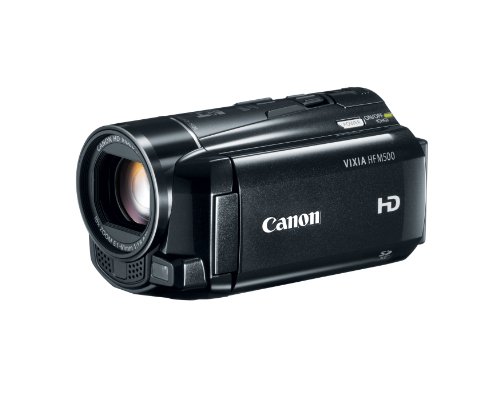
The Canon 6096B001 VIXIA HF M500 HD Flash Memory Camcorder with 10x HD Video Lens is small and light and features unsurpassed image quality thanks to the camcorder's professional-level HD CMOS Pro Image Sensor. The high-sensitivity sensor provides outstanding resolution, better low-light performance, and beautiful, natural detail in both shadow and highlight areas. Intelligent IS and SuperRange Optical Image Stabilization designed for the Genuine Canon 10x HD Video Lens make every scene clear and steady, and built-in features make it easy to give your videos added creativity. Operation is fun and simple with a Flat Touch Panel LCD you control with your fingertips. This camcorder has the flexibility you crave. Enjoy the convenience of recording in AVCHD or MP4 format or to a removable SD/SDHC/SDXC memory card.Package Content:VIXIA HF M500 camcorderbattery packcompact power adapterstylus penUSB cableHDMI cablemanualwarrantyIntelligent IS automatically chooses from 4 different modes to optimize image stabilizationAudio Scene Select enables easy operation and setup for outstanding audio3.0-inch Flat Touch Panel LCD with graphical user interface (GUI)Smart AUTO selects the best settings from 38 predefined situationsAuto Tele Macro provides spectacular close-ups and and dramatic look of video shot with shallow depth-of-fieldHeight 2.50Width 2.70Depth 4.80Weight 0.80Color BlackOperating SystemBatteries IncludedBatteries RequiredNumber of Batteries 1Battery Type Lithium battery pack (included)Language EnglishAssembly Required
Feature
- Genuine Canon HD Video Lens with 10x Advanced Zoom and SuperRange Optical Image Stabilization
- Newly Designed Canon HD CMOS Pro Image Sensor is a professional-level 1/3-inch native 1920x1080 image sensor
- 3.0-inch Flat Touch Panel LCD with a new GUI (graphical user interface) for easy touch control
- AVCHD recording for the highest quality viewing on an HDTV or archiving, or in MP4 format for easy sharing with mobile devices or cloud applications
- Smart AUTO with 38 predefined video capture situations including Auto Tele Macro for close-ups and shallow depth-of-field shots
Subscribe to:
Posts (Atom)